
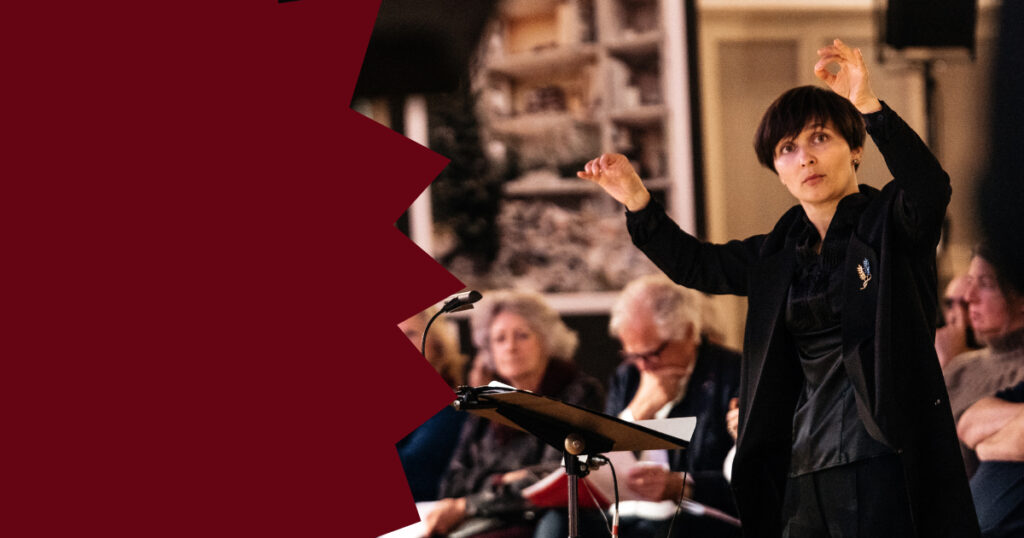
On December 5, in the German city of Bonn, the Ukrainian contemporary vocal ensemble Alter Ratio performed Leonid Hrabovskyi’s cantata Temnere Mortem.
Over the past four years, part of the ensemble’s singers and their conductor, Olha Prykhodko, have been living abroad, yet their concert activity has only intensified. Typically, they produce several concerts and projects each year: in a residency format, the musicians spend a week in intensive rehearsals and present several performances. Their recent projects include Lux Aeterna in Berlin and The Hague (October–November 2025), featuring music by Alla Zagaykevych, Maksym Kolomiiets, Maksym Shalyhin, Peter Kerkelov, and the premiere of a new work by Oleksia Suk.

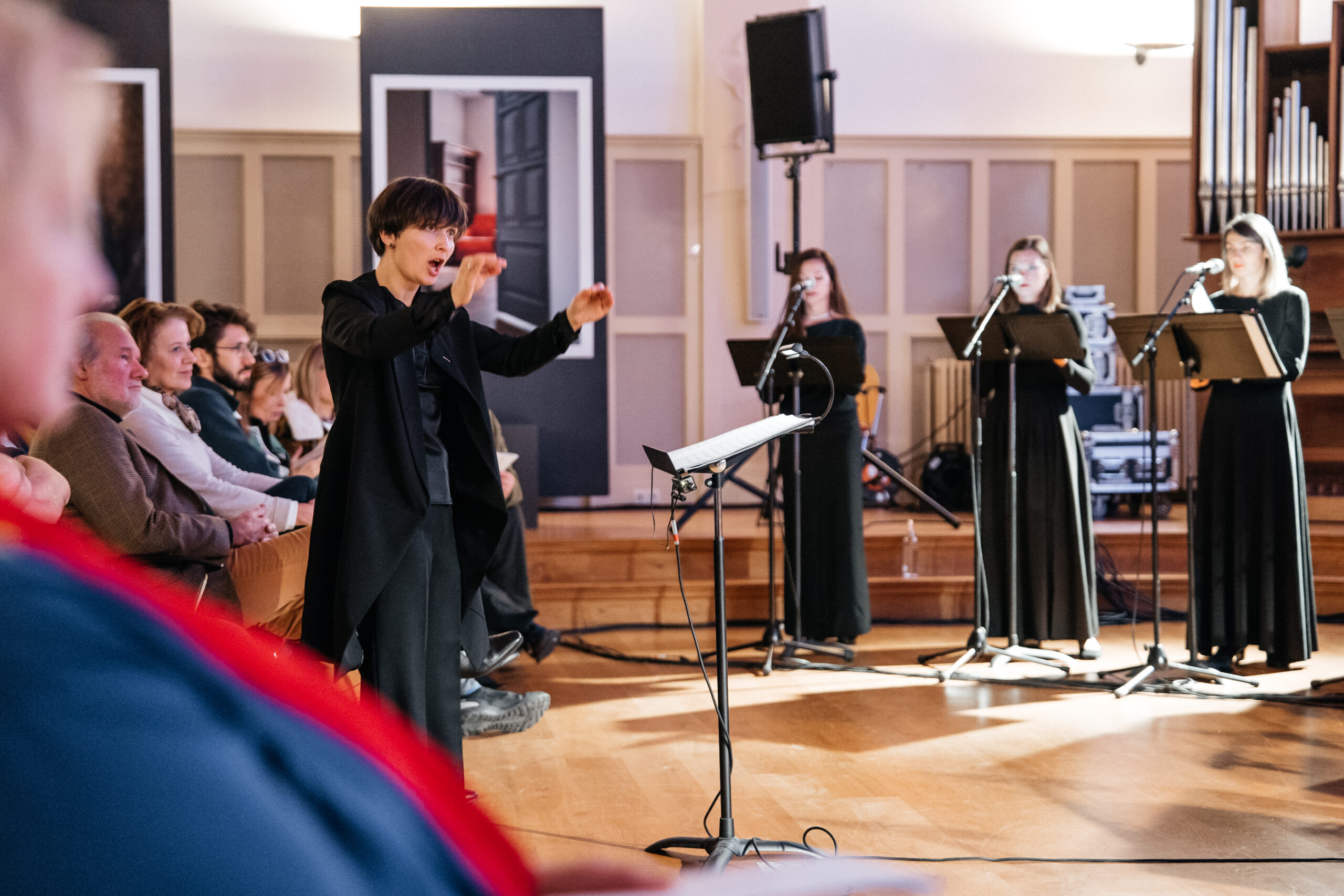
At the Grenzüberschreitungen festival, they were performing for the second time since 2023. This year, the organizers chose the theme of exile and separation from one’s homeland. The ensemble selected works by composers born in 1935. Alongside music by Arvo Pärt and Giya Kancheli, Alter Ratio proposed performing the only a cappella work by Leonid Hrabovsky: the composition Temnere Mortem has become the focal point of their program.
We spoke with the ensemble’s artistic director and with the composer about the particular challenges and sound world of the cantata.
Olha Prykhodko on the Relevance and Challenge of Performing Contemporary Vocal Music
“What is interesting,” she says, “is that for performing music of the 20th century, more precisely, its second half, there is no single method, no single school, no skill you acquire once and then simply apply to every new piece. And this is both the challenge and the beauty of it.
Because each time you discover something new in the next work. I’d say that the main skill for performers working with music from the second half of the 20th century to today is flexibility of thinking: the readiness for change, for constant discoveries, for finding the key to each work. Every immersion into a new piece is like entering a new cultural environment.”

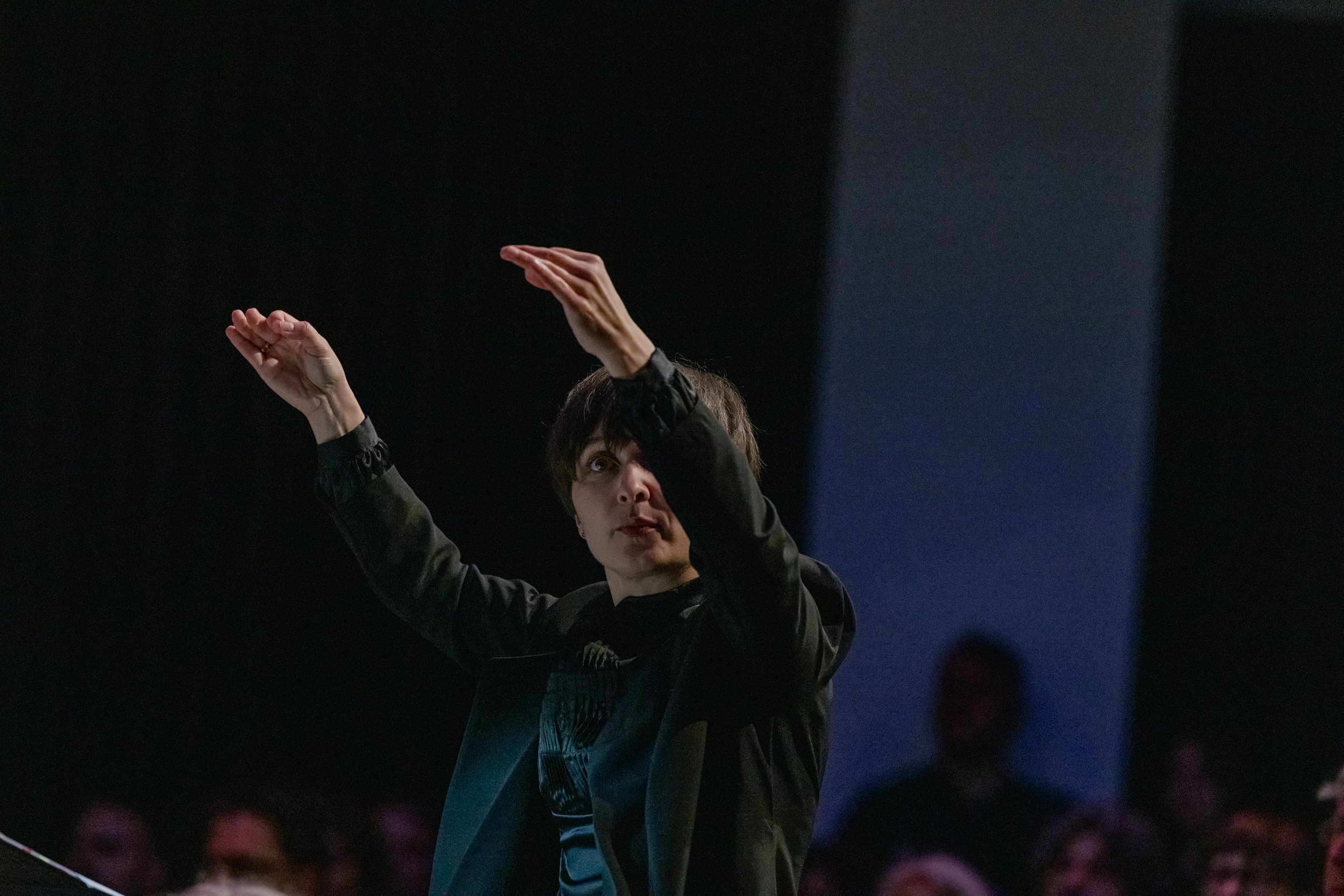
At first, one doesn’t feel rejection but rather a kind of protest: everything is different from what your musical ear is accustomed to. Familiar things appear in a new context, sometimes completely unnatural. Even when entering a microtonal system, the foundation still rests on the same sound system of European music.
And the task of musicians is to find that context each time. It’s different for instrumentalists: some things are simply not as technically problematic for them. But for singers, choir members, and ensemble vocalists, a lot of ‘pre-listening’ is needed, not only to the next note or fragment, but to the overall sound of the piece, to its vertical and horizontal structure, to the score as a whole.
When I begin working on a piece, I take it apart, deconstruct it, to understand the technique the composer uses. Knowing how the piece is built, from the first note to the final artistic idea, I understand not only how to interpret it (interpretation is the final step), but how to learn it, how to convey it, and how to find the technical key to mastering it. The ideas I extract in the process of deconstruction I incorporate into rehearsals and conversations with the performers: I prepare ‘puzzles’ for rehearsals, propose methods of preparation on which they can rely.
Then comes a different stage: individual practice at home, where each musician learns their part; and then an entirely different process begins when they start singing together. A different listening experience emerges: one thing is how you perceive the part alone, another, how you perceive it in interaction with others. And this constant flexibility of thinking is what you need to shape a new sonic image, an image that did not previously exist.
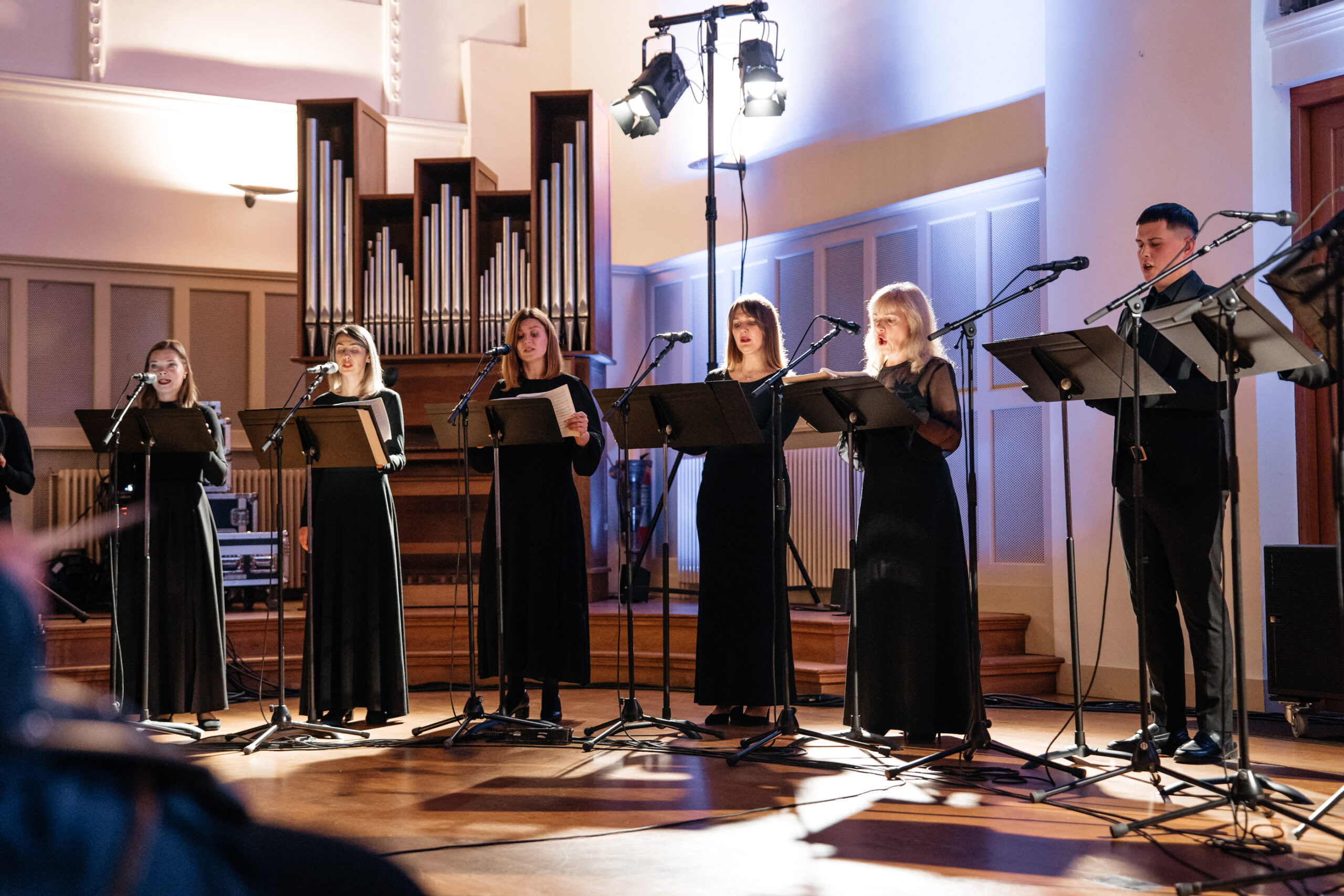
Regarding the cantata itself, Prykhodko explains that the ensemble analyzes and deconstructs it just as thoroughly into individual lines, motifs, sonorities, melodic pathways. One must note that there is a difference between how a composer hears and notates the text he wants to hear, and how that text is heard and reproduced by singers: intervals, chords, sequences sometimes do not exactly match the composer’s intention. This adds another layer of work not merely to read the score but sometimes to ‘adjust’ it, to make the sound and the word natural for the performer, to adapt the score to oneself.
Because of the war, Ukrainian music is performed more abroad. “For various reasons, some noble, supporting; some pragmatic but it’s a good opportunity to show the diversity of Ukrainian music. Musicians we work with abroad are often astonished: there are works written in classical, romantic styles, and there is complex avant-garde music, distinctive, like Hrabovskyi’s.
Leonid Hrabovskyi on the Origins of the Cantata
“In 1972, a collection was published in which I found Hryhorii Skovoroda’s poem On the Holy Supper, or On Eternity. The Ukrainian translations were prepared by our Latinists. But it was the Latin texts themselves that fascinated me. The title of the cantata is mine; it means ‘to despise death.’
Above all, the style and intonation were entirely different. In his works written in Ukrainian, Skovoroda addressed common people on a level they could understand. But in his Latin texts, he was expressing his inner, profound feelings about the invisible world—those of a deeply believing Christian.
I first considered setting these texts to music in the 1970s. But years of circumstances forced me to postpone the idea, and I returned to it only in the 1990s. When the Ukrainian community in New York organized my first composer’s concert and suggested I write something new for it, I realized I must compose this particular cantata.
Within a short period—from early October to mid-December 1991, I wrote the work so that it could be performed at the concert on February 29, 1992. The choir was American, the New York Virtuoso Singers, and they mastered this atonal work in three rehearsals. The only thing they slightly underworked was the dynamics, but the intonation was absolutely precise.”
Fortunately, that recording has survived. It is the only one. To my knowledge, no such recording exists in Ukraine. I believe that about 90% of our Ukrainian vocal ensembles are still unable to perform atonal works like, for example, Schoenberg’s Friede auf Erden; this applies also to my other work, The Sea.

At that time, I didn’t have a computerized system, I didn’t even own a computer. So I worked in the same way as I did for Concerto Misterioso in Kyiv. I had a deck of 52 cards, and from this I generated 104 tone rows. I selected fragments based on random numerical combinations. I shuffled the cards, obtained rows of two-digit numbers, and sequentially created the material: extracting links from the tone rows, as well as rhythmic formulas.
The entire work is in 7/4, so I used only septuplets. These formed the rhythmic structure. Differences between sections are mainly in using the full or incomplete choir (without sopranos or without basses); everything else remains nearly unchanged.
The work consists of five movements. In the first and fifth, the full choir sings. In the second, only sopranos and baritones sing. In the third, the basses are silent. In the fourth, the sopranos are silent. In the fifth, the full ensemble returns. The differences between sections mainly involve timbral coloration and the character of delivery. I only changed the octave placement of the notes obtained randomly. No other intervallic changes or substitutions were made.
What exists now as a finished work is a direct result of using random numbers. It was a major experiment: I didn’t know what the outcome would be. Initially, there was only a general idea, but it developed into a broad system and became a powerful reservoir of expressive means for me. I played through all combinations on the keyboard, testing their performability and vocal ranges, selecting the most interesting verticals of four or five notes. After reading an article on the harmful effects of overusing high ranges for choir voices, I limited the soprano range to F in the second octave.

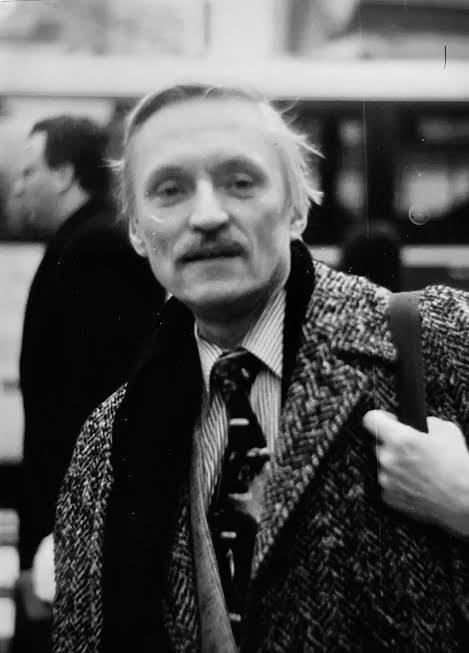
While writing the piece, I experienced something close to euphoria. One of my main motives for moving to America was my conviction that it was a land of computers, a land of rapid technological development. By the late 1980s, I realized: without a computer, working this way for a long time would be impossible. I worked on Concerto Misterioso manually, and the exhaustion was so severe that it led to illness, bilateral pneumonia, almost asthma. That’s when I first realized how necessary computational tools were: what a machine could do in weeks, a person would do manually in months. I sought ways to increase productivity without harming my health.
Olha Prykhodko on Working on Hrabovskyi’s Composition
Hrabovskyi’s work is highly technical music, true mathematics. Our task is to step away from purely mathematical reproduction of sounds and allow musical thought to emerge, even if it is intellectually constructed, related not to classical ‘beauty’ but to the beauty of thought, to a play in construction. The first stage for us is to endure the ‘struggle with sounds,’ to become accustomed to this sound. Then comes the reformatting of hearing: from individual singing to group singing, and then to constructing large phrases and forms vocally.
This process is long and demanding; sometimes unpleasant, sometimes exhausting. It reminds me of how Webern’s music was once perceived, how it was performed and approached. It is ‘pure’ music, without the familiar anchors and repetitions of the past, and therein lies the challenge: moving from mechanical repetition to musical thought.
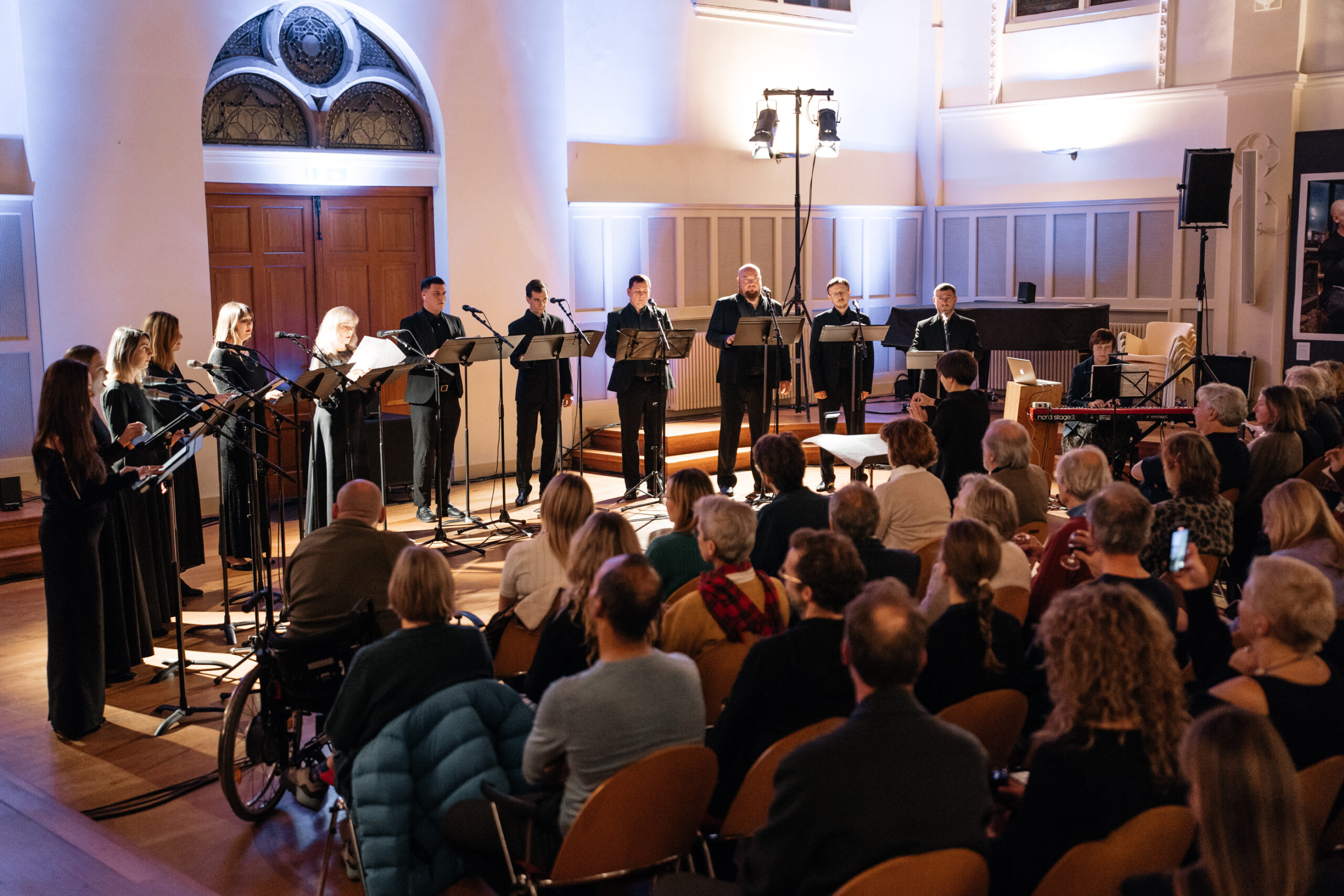
The strong text of Hryhorii Skovoroda also helps immensely. “It is extraordinarily powerful. At present, there is a need or necessity to sing the cantata Temnere Mortem / Despising Death: its last lines are ‘let me love, let me desire death.’ That is, I despise death so completely that there is no need to fear it, and I have already moved to another stage.
Another interesting nuance, she explains, is that if you analyze each vocal line separately, it functions as an independent soloist, often familiar, classically ‘understandable’ melodies. Combining two voices creates, so to speak, an expressive duet (somewhat in the manner of late Strauss). Combining three or four voices generates entirely new music. Returning to the main point, it is very important to understand the technique the composer uses. This is always the key, but technique is not an end in itself. The main thing is to grasp the artistic idea and how the composer realized it.
Read also:
- Solum by Yurii Pikush. A New Ukrainian Piece for Cello and Piano Has Been Released
- Contemporary Music for Saxophone and Piano — a New Release from Ukraine
- Music of Kharkiv. Ukrainian Piano Album Full of Tenderness