
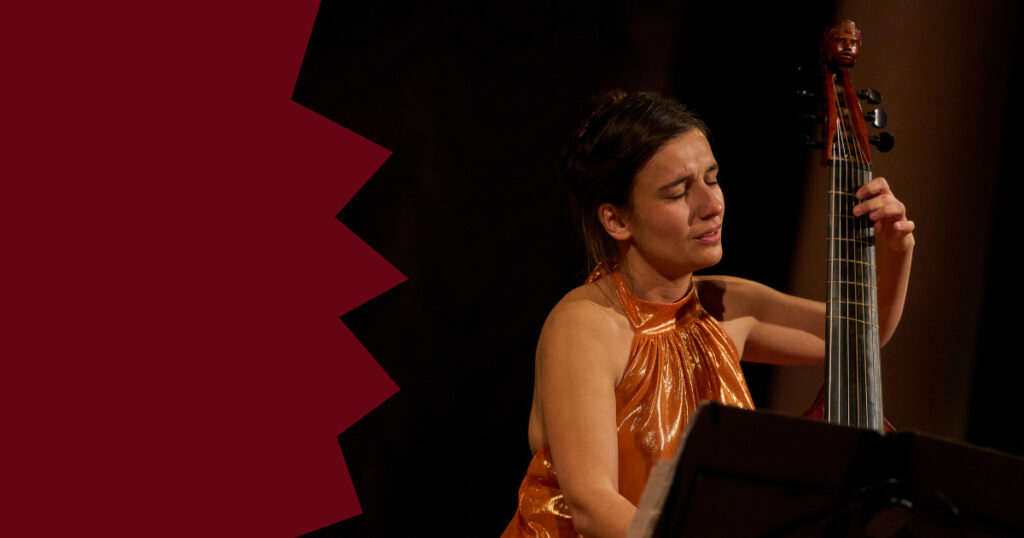
French gambist Salomé Gasselin participates in numerous European early music projects. She appears as a soloist, collaborates with various ensembles and leading performers, and is developing her own viola da gamba consort.
This year, the musician came to Ukraine at the invitation of the Kyiv Baroque Fest for the first time. For the audience, it was an opportunity to hear one of the most interesting young performers from France. For Salomé, it was an opportunity to become acquainted with the Ukrainian music community and Baroque heritage.
In this conversation, we talk about Salomé Gasselin’s path in music, her education and performances in France, her collaboration with ensembles, and her musical world today. Furthermore, we even fulfilled one of my long-held dreams.

This is your first trip to Ukraine. How do you like Kyiv?
The first word that comes to mind is “huge city.” Everything seems to be very large-scale — the buildings, the space, and the rhythm.
Meanwhile, I was surprised by your calmness. It is evident everywhere. People are strong, composed, and resilient, and the fact that you continue to organize such events is very impressive. In my opinion, this is one of the best ways to resist.
I went for a walk right after the morning sirensand climbed up to the park above the Kyiv Philharmonic. There, near St. Andrew’s Church, I saw the blue of the temple merge with the sky. I had never seen anything like it before.
Baroque performers talk a lot about the art of that era, about gold, rich colors, and intensity. It seems that your churches have exactly this kind of spirit — bright, lively, and close to what Baroque was originally. In France, Baroque paintings have faded, the colors have become dull, but here everything is alive, bright, and rich in color.
What prompted you to come to the Kyiv Baroque Fest?
Two people. The first was Roman Melish. He reassured me that the festival organizers would take responsibility for safety and gave me complete freedom to decide whether to come for myself. The second was my friend Jean Rondeau, a French harpsichordist. He was here last year. I heard that his concert was incredible. I called Jean and he said, “Listen, if I were free, I would go with you right now.” After that, I realized “Okay, I’m going”.
Also, it is meaningful for me to play in such a context and to bring music to places where it is important. I felt that this was exactly the case with my visit to Kyiv.
I understand. Since you are here at the Kyiv Baroque Fest, I am very curious if you had any previous experience with Ukrainian music or Ukrainian Baroque? Have you played with Ukrainian musicians?
I know a few Ukrainian musicians. I recently met a friend of one violinist. We talked a lot and he also supported my decision to come to Ukraine. There is another musician, Vadym, who plays with Amandine Beyer. We haven’t met in person, but I know about him.
As for Ukrainian Baroque music, I must admit, I don’t know enough about it.
We then decided to listen to some Ukrainian Baroque music. Having little time, I chose a few pieces, vocal works by Dyletsky and Berezovsky,and a few instrumental pieces. We listened to short excerpts, to get first impressions of this music.

What are your impressions?
Thank you for introducing me to this. I am truly impressed. I was particularly moved by the vocal works, especially those by Dyletsky.
In the case of Berezovsky, I was surprised at large differences between his vocal and instrumental compositions. The instrumental pieces sounded more modern, almost gallant, while the vocal excerpts had a completely different character, as if from a much older tradition. I find this combination in works of the same composer extremely interesting.
I am also very interested in learning whichpieces from this repertoire could be played on the viola da gamba. After all, the viola da gamba is closely associated with French and English music and in Kyiv I suddenly heard a completely different sound.
What fascinates me most about early Ukrainian music are the contrasts. It is very colorful music and the way it sounds echoes what I see around me in Kyiv.
It is deep, both in terms of imagery and color, in places very light, in places completely dark, in some places even lighter, in others denser, deeper, and darker. In those few minutes of music that I heard, it was a journey between light and shadow. I would love to hear more.
How did Baroque music come into your life?
I was ten years old. I played the violin andstudied at a Conservatory in France. I was forced to study music. My mother is a musician. She said that until I turned ten, I had to play an instrument, because you can’t understand whether you love music unless you play with other musicians. To play with others, you need to be able to express yourself with an instrument. So, you must study for at least five years. That was the rule at home. It seemed strict to me, but now I am incredibly grateful to her for that strictness.
The day came when I told my violin teacher, “Goodbye, I’m quitting.” At that moment, I felt proud, as if I had taken my first independent step, even against my parents’ wishes. I just couldn’t stand my violin teacher. I cried before every lesson. My first encounter with music was painful. On that very day, when I left my teacher’s office and closed the door, there was a viola da gamba teacher standing in the hallway. It was like a vision. I felt it literally with my body, like a bolt of lightning, like falling in love.
I was stunned by the sound as the viola da gamba resonates so beautifully. I had never heard this instrument before. At first, I thought it was a cello but immediately realized that it wasn’t. My brother played the cello, and I knew the cello teacher. He was a different man. I went up to the viola da gamba teacher and said, “I really like the sound of your instrument. What is it?” He replied, “It’s a viola da gamba.” I started taking lessons. Now I play it every day.
I confessed to Salomé that I had long dreamed of learning to play the viola da gamba, but in Ukraine there is simply nowhere to learn it. We don’t have classes for historical instruments and don’t have viola da gamba teachers. It always seemed almost unattainable for me. Salomésmiled and said, “Let me teach you.” We agreed to meet the next day and two of my colleagues joined us.
Salomé showed us the basics: how to hold the instrument, bow, and the general sensations that should arise while playing. I never thought there could be an instrument with a “lazier” posture than the cello, but the viola da gamba turned out to be just that. Of course, I didn’t learn to play in one lesson, but the foundation has been laid. Honestly, that’s already an incredible amount.
In Ukraine, early music is not usually part of basic education. Children learn to play modern instruments and Baroque comes much later, if at all. I’m very curious about how it works in France. At what age can children start playing the viola da gamba or other historical instruments? How is Baroque education organized in your country?
In the 1980s, a movement of Baroque musicians emerged. It was a kind of “Baroque revolution”. Contemporary performers suddenly became interested in Baroque music but, at the same time, went against what they had been taught before. This led to a very sharp division between the “contemporary” and “Baroque” schools.
Baroque performers in the 1960s and 1970s did not want to study at conservatories. They feared that institutional rules would destroy their freedom and passion. They were treated with contempt since violinists, cellists, and pianists often thought that Baroque was chosen by those who “could not cope” with the modern repertoire.
In the 1980s, several prominent musicians decided to teach Baroque music to children as young as five in conservatories since both the harpsichord and the viola da gamba could be learned as early as the piano or cello. This system began to gain popularity in the late 1980s and early 1990s.
When I started studying music in 2002–2003, even small conservatories had viola da gamba classes, not only in big cities, but throughout the country. It was possible to start learning this instrument anywhere, if you could find a teacher. The only problem was that teachers had to go to solfege classes and literally show their instrument to the children: “Look, this thing exists!”
I subsequently began teaching viola da gamba at the conservatory. It works very simply; you come to the children, show them the instrument, play a few notes, and they fall in love. The viola da gamba attracts special children. It is unusual, a little mysterious, and no one knows it. Children love to feel special and to have an instrument that no one else has. They run to class, tell everyone, make their little “discoveries,” and can practice for hours, simply because they have something unique in front of them. In recent years, the viola da gamba has become almost commonplace. Not widespread, of course, but no longer a rarity.
Do your students only learn to play the viola da gamba. Do they also learn to play cello or violin?
Most of them only play the viola da gamba.
There are other examples. Some of my friends were originally cellists. They completed their bachelor’s degrees, began studying the Baroque cello, and later the viola da gamba. Now they play both instruments. However, most gambists only play the viola da gamba because it requiresa lot of work. I have a friend who plays both the modern cello and the viola da gamba. That happens too. There are no rules and many different paths and performance models.
When you are a child, you are not taught Baroque theory and treatises. You learn to play as a “soloist” simply through the instrument, not through a historical approach. It’s only when you’re fourteen or fifteen that you start to learnabout it [Baroque theory and treatises].
Children perceive everything instinctively, not analytically. I’ve always been an intuitive performer. I think that helped me. You cut yourself off from your emotions when you analyze too much. Baroque music is alive, emotional, and imbued with feelings. It is impossible to play it without connecting with your own soul. As mentioned earlier, when I first heard the viola da gamba, I was struck by its sound.
There is also another important point: my mother listened to Bach’s cantatas a lot at home. So, I was in this musical “world” from my childhood.
Baroque music was completely instinctive for me, much more than classical.
I understand Baroque. I don’t know why, but I feel and understand Baroque music much more deeplythan classical music. It is natural, as if it isdirectly connected to my soul.
At first, I played Baroque music “by feel.” Only later did I become familiar with historical practice, the connections between the present and the past, and discovered layers of time and how, through them you can almost touch another culture, distant but at the same time familiar.
The path may be reversed if a person starts playing Baroque music as an adult. When you start as an adult, your mind works first; you discover this “exotic” world of the past. Only then does it pass through your emotions and your soul. You go in the opposite direction and that works beautifully too.
Let’s talk more about your own viola da gamba. I know you have a very old instrument.
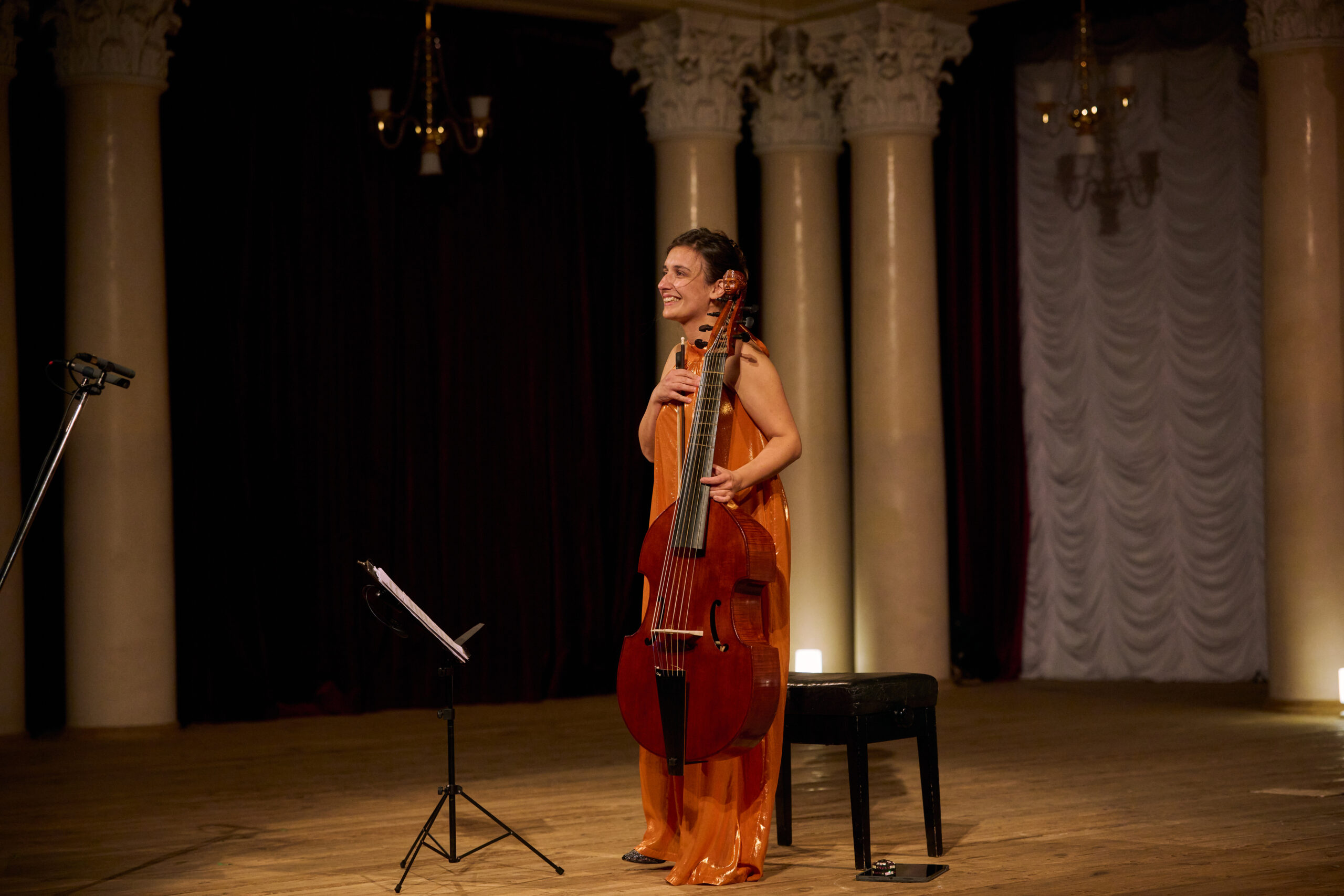
Yes, but I couldn’t bring it with me. It’s too old for traveling, almost 400 years old. I never fly with it; it’s too risky. I only travel by train with my viola da gamba and don’t let go of the case for a second. I feel a great responsibility; so many people have played it before me, and I want it to live on after me.
This time I flew from Lyon to Warsaw. I couldn’t take my old gamba with me, and I didn’t know how things would go at the border. They made me open the case twice. They touched the wood. With my old gamba, I would have had a heart attack.
That’s why I came with my other gamba, the one I played until 2021. I know it well; we’ve been through a lot together. It’s also very precious to me, and I’m the only person who has ever played it. I hope to come back to Ukraine one day with my antique gamba, only by train. I haven’t even told Roman about this yet.

My old viola da gamba has a completely different character. It doesn’t always let you do everything you want, but it opens other possibilities, as if it were showing you the way. Sometimes I want to go in a certain direction, but suddenly I hear the voices of the musicians who played it before me in my head [saying]“Not like that” and then I look for another way.
Now I’m back playing my other viola da gamba. I can do whatever I want on it, but I always take the experience of the antique one with me.
How can people find and purchase historical instruments, such as the viola da gamba, in France or anywhere else?
To be honest, it’s almost impossible to buy them. If someone wants to buy an original viola da gamba, they usually must go to the US. There are several collections there, such as the Caldwell Collection, where instruments are sold from time to time.
Here’s the strange thing: these violas are rarer than antique violins or cellos, but cheaper. I hope it stays that way. The market is small. Wealthy collectors are hardly interested in violas, so young performers still have a chance to find an instrument.
For example, I had to choose between buying a home or an instrument. I chose the instrument.
Stradivarius violins cost millions and are completely out of reach. But this old viola has become more valuable to me than any Stradivarius because there are almost no antique French violas left. During the French Revolution, many of them were lost, and the rest were simply converted into cellos since no one thought about preservation. So, finding a viola da gamba like this is a real stroke of luck and perhaps a once-in-a-lifetime chance.
My story was almost unbelievable. I took part in a competition in Switzerland. After my performance, one of the jury members approached me and said, “I play an original viola da gamba. I want you to play it. But you will have to find a lot of money and take out a loan. If you find it, it’s yours.” I went to my craftsman, and he said, “No, don’t do it. It’s too expensive.”
Then a miracle happened. An acquaintance of his who had bought an old viola da gamba back in the 1980s, decided to sell it. She arranged an audition at her home, invited musicians, gave the instrument to several people, listened to everyone, and chose me.
She could have sold this viola to a museum for a huge amount of money. But she wanted the instrument to live on and to be played by a young musician. She gave me an incrediblediscount, significantly lower than the original price. It was still a lot of money, but it was something I could afford.
Let’s talk a little about the viola da gamba repertoire. Which composers or works do you most enjoy performing on this instrument?
First, the 17th -century French music. That’s where I started, and it is like a home to me, like something in my blood. Marin Marais is a true “angel” of music, as his contemporaries called him. Antoine Forqueray is the “devil.” They lived at the same time in Paris and constantly competed to see who was better.
I really like this drama. Even the little dances, which are usually not taken seriously, sound like they have a whole story behind them in Marais’s music. What strikes me most about French music of this period is its intensity. It is very emotional, powerful, and rich.

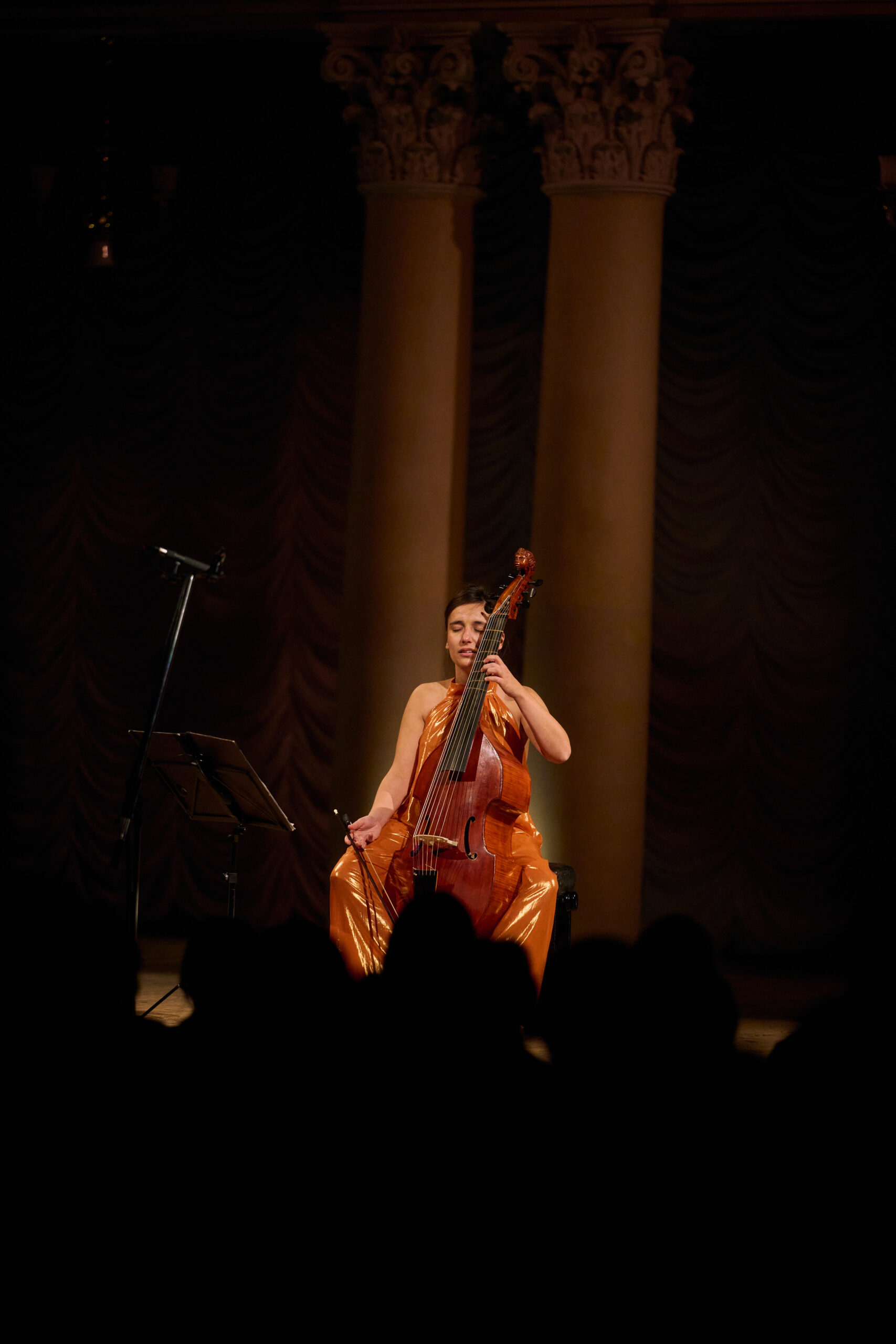
I also love listening to French harpsichord and organ music from the 17th and 18th centuries, [for example] Dumont, Du Mage, and Guilain,not only Couperin, although he is the most famous. My old viola da gamba has a connection with the Couperin family and sometimes I think that maybe one of them played it. It’s inspiring. This repertoire is the most important one in my heart.
Also, I love the later gallant style, like German composers of the second half of the 18th century such as Carl Philipp Emanuel Bach, Carl Friedrich Abel, and Andreas Lidl. Of course, Bach, who doesn’t even need to be mentioned separately. He is a whole universe for me.
Do you ever play contemporary music or combine it with Baroque music?
Так, сучасна музика на гамбi мене дуже цікавить. Нещодавно я робила програму в Парижі, де поєднувала Кіта Джарретта і Генрі Перселла. Ми взяли кілька його фортепіанних і тріо-п’єс і адаптували їх для гамб і гітари — вони звучали абсолютно природно. Мені здається, що Джарретт інтуїтивно відчуває старовинні тембри.
Yes, I am very interested in contemporary music played on the viola da gamba. Recently, I did a program in Paris where I combined Keith Jarrett and Henry Purcell. We took several of Jarrett’spiano and trio pieces and adapted them for viola da gamba and guitar. They sounded completely natural. I think Jarrett intuitively feels ancient timbres.
Recently, I commissioned a new work from Caroline Shaw, an American composer. In France, for example, Philippe Hersant writes for the viola da gamba. Since the 1980s, contemporary music has increasingly been written for this instrument.
Today the viola da gamba can be used like any other instrument, not limited to early music. It’s just another way of communicating.
Would you like to try playing some avant-garde contemporary music?
I’d love to. Do you know Fausto Romitelli? When I first heard him, it was a shock. I thought, “God, I want to play this on the viola da gamba.” I haven’t found the right piece yet, but I will. There’s also George Benjamin. He wrote for the viola da gamba, both as parts in operas and as a separate piece for five violas da gamba called Upon Silence. It’s a very beautiful piece. It was Romitelli who introduced me to contemporary music.
I was struck by a coincidence; ensemble24 (the group I play in) was currently preparing a production of Fausto Romitelli’s video opera Index of Metals with Victoria Vitrenko. It took place only a few days after our conversation. It was an unexpected and very pleasant coincidence, as if this musical world had suddenly come together from several different sides.
Since most of your repertoire consists of early works, let’s talk a little more about historically informed performance. How do you usually approach Baroque works? Do you rely more on treatises or intuition?
During my studies (I studied for about ten years, starting at the age of eighteen) I read a lot: treatises, books about treatises, and scientific works. I can even recommend one book, (which I hope has been translated) Bach et la machine-orgue by Pierre Vidal. He is a French organist. This book is incredibly well thought out and written.
Do you know what I’m afraid of in historical performance? That music will turn into a museum, something frozen, and preserved. I am afraid of this “freezing” when people try to perform music only correctly from a historical point of view.
In French, the word historicité meansconformity to history. However, I’m not interested in being “correct” from the perspective of the past because we do not live in that time and cannot experience the world as they did. However, that should not stop us from wanting to explore how it might have sounded.
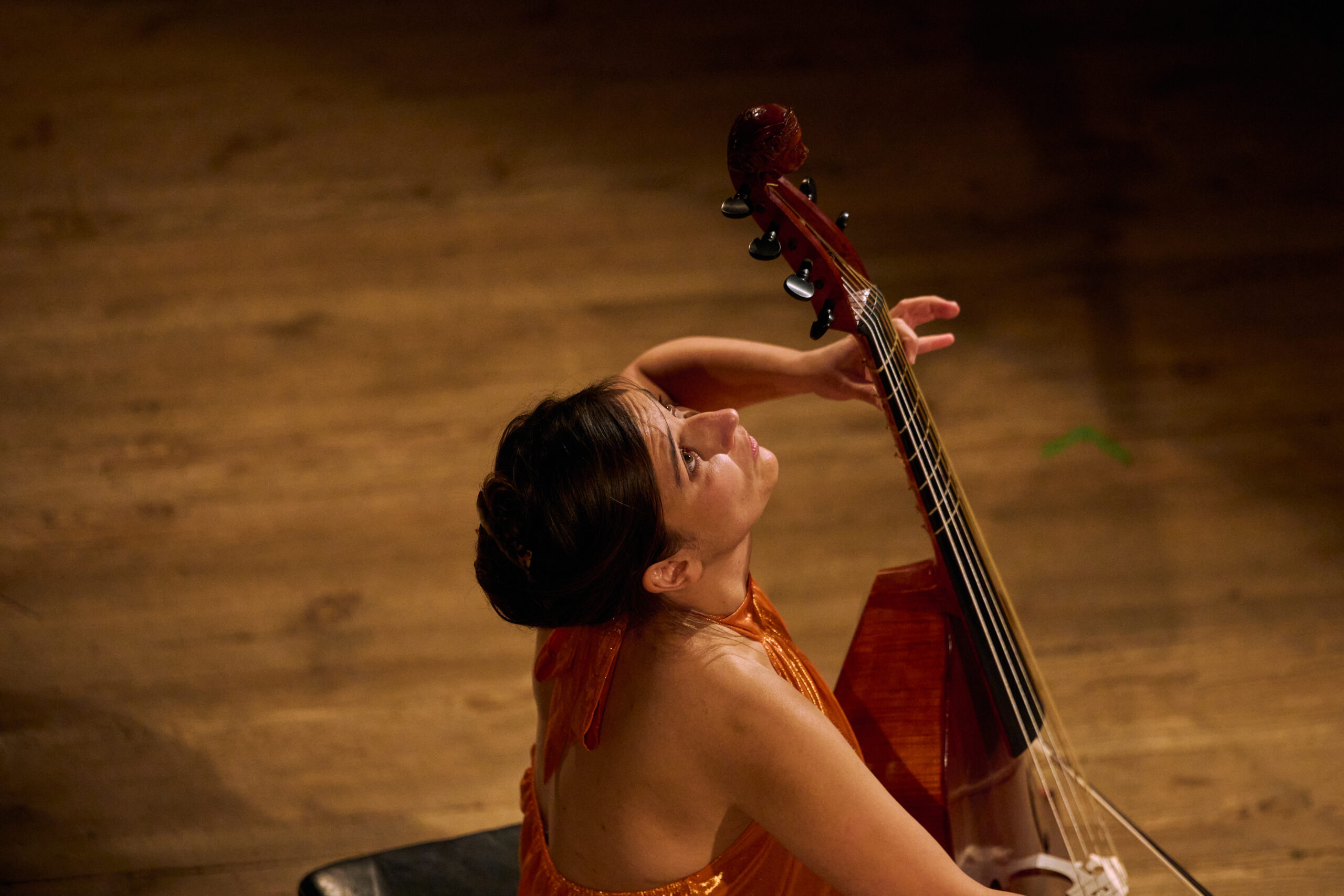
I still want to understand how this music sounded and I try to get closer to its essence and to the original meaning that composers put into their works. My goal is to let this music pass through me, my body, my experience, my present, and play it for the people of the present.
This is my way, to first get as close as possible to the source and then convey it in my own language with my own accent. A musician is a mediator. The main thing is not what I personally think or feel, but whether I am able to understand the intentions of the composers of that time and convey them to a modern audience in such a way that they sound lively and authentic.
Where do you start when you take on a new piece?
I start by “singing” it in my head since music is born through singing for me. That’s how I feel its form, movement, and phrasing, probably because I associate Baroque music with traditional music. I’m not the best at reading music and more of a “listener” than a “reader.” There is an advantage to this method since,often in modern education, we are taught to look at the notes, but music requires us to listen first and foremost. That’s why I consciously try to close my eyes and open my ears.
When I get acquainted with a new piece, I first determine its colors and contrasts and how I see and hear it, even if it seems chaotic at first and the notes are not yet “put together.” Then I gradually build the form of the piece, but always leave room for live, improvisational space.
I like to think of Baroque music as fixed improvisation and music that was once born in the moment.
I try to imagine the composer’s train of thought, his logic, and create my own performance based on this understanding. Of course, I’m not Bach. However, it’s not literal accuracy that’s important, but the way of thinking that brings the music to life.
What would you advise me, as a cellist, if I want to try playing Baroque music?
As a cellist, I would say one thing, to start with your heart. Not with technique or history, but with your own feelings. That is your voice. Play through it. You can do this with any repertoire, but it’s especially important in Baroque. Baroque music is extreme in its contrasts. There is no “a little.” It’s always either very light or very dark, either very delicate or very sharp,either gentle or extreme. My advice is simple, to start with a feeling. If you start with it, you are already on the right track.
Another thing is that no one can deny your feelings. It makes you unique, because everyone experiences music in their own way. Otherwise, everything becomes standardized and template-like.
It’s music without standardization. In some ways, it’s even a contrast to a world where everyone is trying to fit into molds such as “men are like this,” and “women are like that”. It makes me shudder. Baroque is the opposite, like a gesture of freedom and self-affirmation.
Listen to as many Baroque performers and Baroque music as possible and get an idea of how it could sound. Treatises are also very important as they help you understand the context and thinking of the era. If we’re talking about specific works, I recommend starting with La Rêveuse by Marin Marais. It’s a very good work and I’m sure you’ll like it.
You could also listen to Magnificat from Monteverdi’s Vespers. The beginning of this music literally puts you in your seat, holds you, and envelops you. It’s a feeling that’s hard to describe.
Let’s talk a little about your career, projects, and ensembles. You work with so many groups. Who are you collaborating with most now?
In French, we call this a question-piège, or “trick question.” I used to play a lot in various Baroque ensembles in France. For the last year or so, I’ve been focusing primarily on creating my own ensemble Cairn Consort, on leading it, and shaping its sound.
I dream to play morewith this ensemble. The repertoire for viola da gamba consort is incredible. It is as extensive as the repertoire for string quartet, but almost no one knows about it. It is fantastic and wonderful music. My goal for the coming years is to play as much of this music as possible with my musician friends.
Which composers’ works do you play?
Purcell, Loiseau and a lot of 17th-century English music. We play French music, like Moulinié, organ works by Dumont, Couperin, Guilain and Du Mage. There’s a lot. Charpentier sounds wonderful. We can easily transcribe Bach’s organ music for the consort. We can literally “sing” vocal music on the viols and have already started working in this direction, for example, the project with Jarrett that I mentioned above. We also will play contemporary music with the consort.
What is a career for an early music performer like in France?
It is very competitive. That is probably the biggest downside. Like many of us, I try not to think about competition. If you start competing, you can forget about consort music (laughs).
We have a big stage right now. I don’t know if it will last. I’m afraid that the political processes taking place in France today will make the situation much more complicated. The country is moving to the right politically. This threatens the funding of the arts and the conditions for musicians. However, there are still many people fighting for the arts to exist. We are very lucky to have these opportunities, for now.
Another important point is that musicians in France can receive a kind of “creative pension” if they perform a certain number of concerts per year. I believe it’s around 42. That’s a lot, but it’s realistic.
You get money for concerts and from the state. It’s the status of an artist. So, you can live exclusively from music and don’t have to work in a cafe or somewhere else to pay for housing and food. That’s very lucky. That’s why, after studying in the Netherlands and Austria, I returned to France. In France the system is designed so that musicians can make a living from their profession.
However, it’s not easy. For many, it’s unattainable, but it is easier compared to other countries, like Spain, Britain, or Ukraine.
During our conversation, I mentioned that I wouldn’t be able to attend Salome’s evening concert because I had my own rehearsal. I asked if I could at least come to her rehearsal and listen to part of the program. Salome immediately agreed and warned me that she never plays pieces in their entirety before a concert and saves all her inner energy for the stage.
The rehearsal was brief. She played short fragments, checking intonation, balance, and sound in the hall, while the lighting was being adjusted. It wasn’t a performance “from beginning to end,” but even these small excerpts sounded so beautiful and natural that I felt a slight envy for those who would hear the entire program in the evening. Even that was enough to understand how special this concert would be.
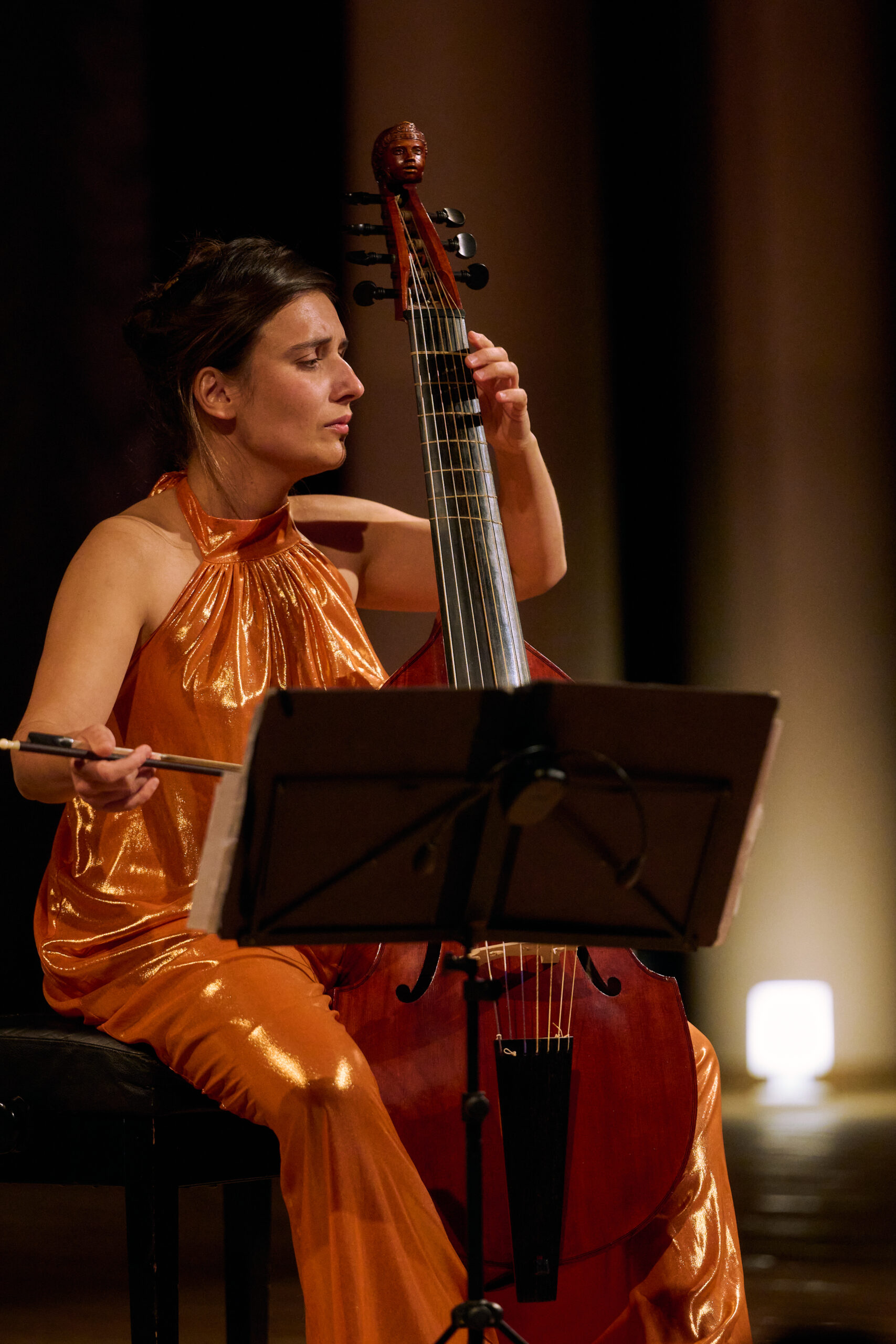
I read your foreword to tonight’s concert. It’s incredibly beautiful. I liked the image of music that “evaporates with time.” It’s so touching. Can you tell us more about it?
I grew up in the French countryside, surrounded by vineyards. There are endless vineyards above our house. I love wine very much. One day I want to make it myself and am already on that path. I often visit wine cellars, talk to winemakers, and taste wines. Once, one of them told me something interesting, that during fermentation, when the barrel is closed and then opened, some of the wine disappears. In the past, they said it was the “share of the angels.”
I immediately drew a parallel with early music. This is exactly what I was trying to explain earlier, that we strive to get as close as possible to something very distant. The original is a full barrel and a full volume. What remains for us is only a part of it. Everything else has “evaporated,” and we will never hear it, but that doesn’t diminish the value of what we have. It’s the same with wine; what’s left is still wonderful.
It’s a way to show the connection between the past and the present in something very material. When we think about the past, it seems too distant and abstract and this way it becomes closer. There is still so much flavor in our musical heritage, and so much that could be “tasted.”
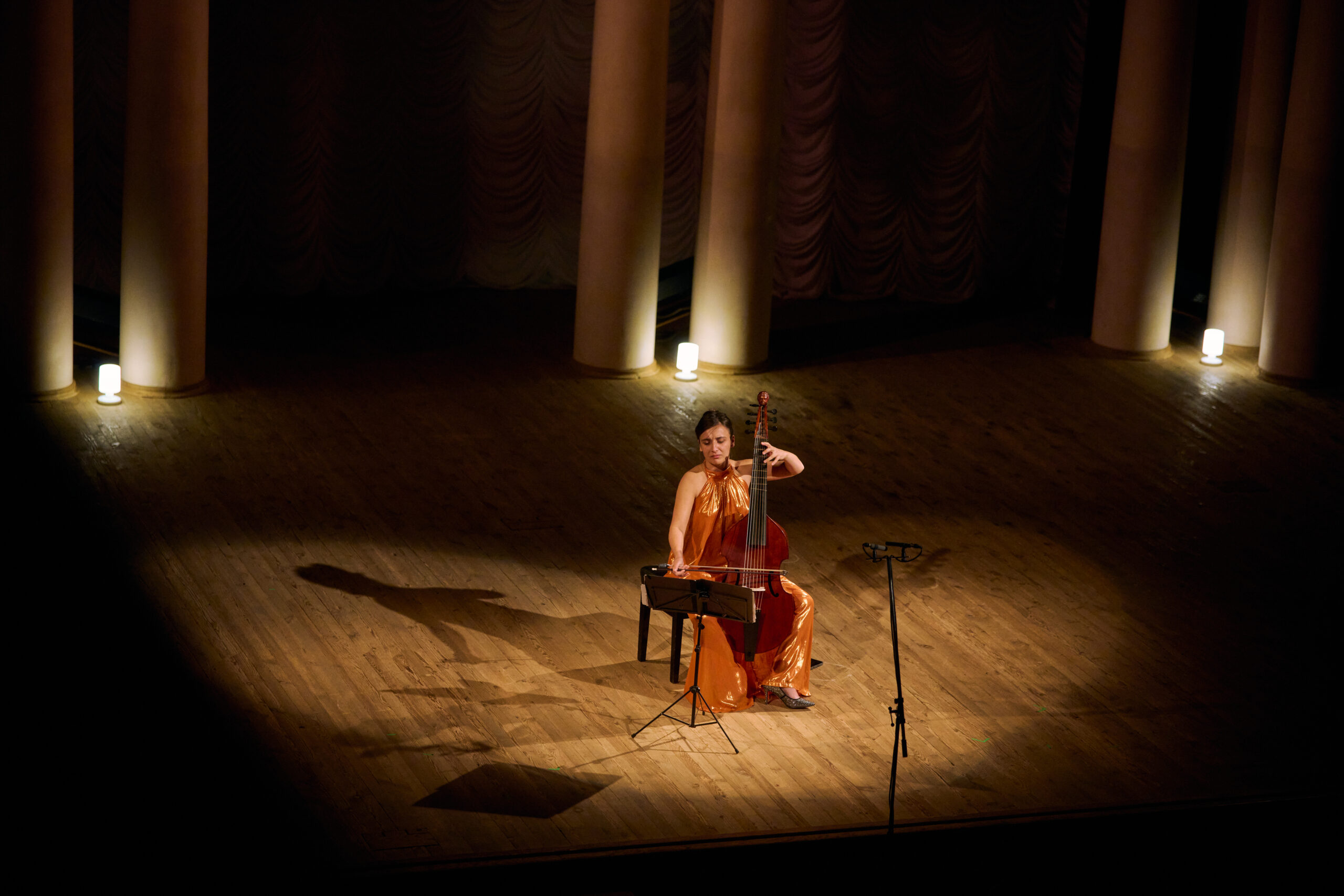
For the program, I chose Baroque suites for cello. One of them, Bach’s second suite, is a monumental work and not easy to approach, but I really want to play it right now. It is natural to play it on the viola da gamba. The work is in D minor, and the tuning of the viola da gamba is also in D, so much of it transposes naturally. Sometimes I add chords if there are big jumps and adjust the harmony accordingly.
In addition to Bach, I chose Marais and Forqueray, “the angel and the devil.” This is directly related to the title of the program, “a share of angels”, and to the two opposites of French music of that time. These are composers whom I love very much.
To finish, I will play music by Abel, a gambist in Bach’s orchestra. In Bach’s Passions, the gamba arias are heard at the most intense moments, when Christ dies. For Bach, the gamba was already an old-fashioned instrument at that time, but he chose it for the deepest and most dramatic moments. Abel’s own music style is already gallant. I wanted to show the contrast between what the viola da gamba was then and what it is for me now.
How did you put together the program for today’s concert? What influenced your choice?
I put together the program as if I had anticipated that this trip would be very emotional[involving] the journey, everything new, and what I see and feel here. I chose music that is so much a part of me that I can play it at any moment, even under sirens.
Before meeting you, I saw a wall with photos of fallen soldiers, destroyed tanks and cars. It had a profound effect on me. It was difficult for me. I wanted to cry. I am very sensitive and absorb everything like a sponge. From the first minute I arrived, I felt tension. Our conversation restored my balance. It helped me gather my strength to go out and play. I am very grateful for that.
Read also: